

To replace a kitchen cabinet hinge, open the door, unscrew the hinge from the cabinet frame and the door, match the new hinge to the old one’s size and overlay type, then screw the replacement into place and adjust it until the door sits level and closes smoothly. Most hinges can be swapped in under 15 minutes with just a screwdriver.
A cabinet door that droops, won’t close, or creaks every time you open it isn’t a sign you need a new kitchen — it usually just means the hinge has worn out or was a cheap fitting to begin with. The good news is that hinge replacement is one of the simplest kitchen repairs a homeowner can do, and in most cases you don’t need a tradesperson or a new door to fix it.
This guide walks through how to identify the hinge you have, the tools you’ll need, and a clear step-by-step process for replacing it — plus the mistakes that trip people up and when it’s worth calling in a professional instead.
Signs Your Kitchen Cabinet Hinge Needs Replacing
Not every wobbly door needs a brand-new hinge — sometimes a quick tightening or adjustment is enough. Replace the hinge when you notice:
- The door sags, drops, or hangs unevenly compared to the others
- It creaks, squeaks, or grinds when opening and closing
- The door won’t close flush, or catches on the frame
- You can see rust, cracking, or a bent hinge arm
- The screw holes have worn loose and the screws spin freely
- The hinge no longer holds the door shut (no spring tension left)
If tightening the mounting screws doesn’t fix the problem, the hinge itself has worn out and replacement is the next step.
Types of Kitchen Cabinet Hinges: how to replace a kitchen cabinet hinge
Before buying a replacement, you need to know what type of hinge is currently fitted. Getting this wrong is the most common reason a replacement doesn’t fit.
Concealed (cup) hinges
The most common type in modern kitchens. A round “cup” sits inside a drilled hole in the door, hidden from view when the door is closed, with an arm connecting to a mounting plate on the cabinet frame.
Overlay type
Concealed hinges come in three overlay styles, based on how much the door covers the cabinet frame:
- Full overlay — the door almost completely covers the frame
- Half overlay — used where two doors share one frame edge
- Inset — the door sits flush inside the frame opening
Face-frame vs frameless
Face-frame cabinets (common in traditional and older Irish kitchens) use a different mounting plate than frameless (European-style) cabinets, so always match this before ordering.
Soft-close hinges
Many newer hinges include a built-in damper that stops the door slamming. If your current hinge doesn’t have this, it’s a worthwhile upgrade when replacing.
Tools and Materials Needed
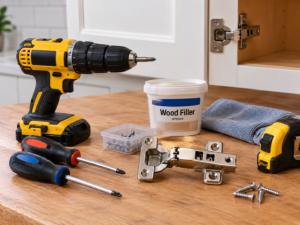
- Phillips (cross-head) screwdriver, or a cordless drill with a Phillips bit
- Replacement hinge (matched to your old one — see below)
- A small tray or dish to hold screws
- Pencil and tape measure (optional, for checking alignment)
- Soft cloth (to clean the hinge cup recess before fitting)
Buying the right replacement: take the old hinge with you to the hardware shop, or photograph it next to a ruler. Match the cup diameter (usually 26mm or 35mm), the overlay type, and the opening angle (most are 110–165 degrees). If you’re unsure, a photo sent to a kitchen hardware supplier is usually enough for them to identify it.
How to replace a kitchen cabinet hinge: Step-by-Step
1. Support the door
Open the door fully and have someone hold it, or rest it on a folded towel so it doesn’t drop once the last screw comes out.
2. Remove the door from the mounting plate
Most concealed hinges have a small release lever or screw on the mounting plate — flip or loosen it and the door, with the hinge cup still attached, will lift away from the frame. Set it on a flat surface.
3. Unscrew the hinge from the door
Turn the door over. Remove the two screws holding the hinge cup into the drilled recess in the door and lift the old hinge out.
4. Fit the new hinge to the door
Press the new hinge cup into the same recess, lining up the screw holes, and drive the screws in snugly — don’t overtighten, as this can strip the hole in chipboard doors.
5. Reattach the door to the mounting plate
Hook the new hinge arm back onto the existing mounting plate (replace the plate too if it’s damaged or the screw holes are worn) and snap or screw the release lever closed.
6. Adjust and test
Close the door and check it sits level and flush with its neighbours. Use the hinge’s adjustment screws to fine-tune:
- Depth screw — moves the door in/out from the frame
- Side screw — shifts the door left/right
- Height screw — raises or lowers the door
Open and close the door a few times to confirm it swings freely and the soft-close (if fitted) engages smoothly.
Common Mistakes to Avoid: how to replace a kitchen cabinet hinge.
- Buying the wrong overlay type — a full overlay hinge won’t sit right on a half-overlay or inset door
- Overtightening screws — chipboard doors strip easily; snug is enough
- Ignoring a worn mounting plate — a new hinge on an old, loose plate will sag again within weeks
- Mismatching cup size — a 35mm hinge won’t fit a 26mm recess without re-drilling
- Skipping the adjustment step — most “faulty” new hinges just need the three adjustment screws fine-tuned
DIY or Call a Professional? : how to replace a kitchen cabinet hinge
Replacing a single hinge is a straightforward DIY job for most people with basic tools and 15 minutes to spare. Consider calling a kitchen repair specialist instead if:
- Several hinges across the kitchen are failing at once (often a sign of a wider quality issue with the original install)
- The door, frame, or mounting holes are damaged and need reinforcing or re-drilling
- You’re not confident identifying the hinge type, or the kitchen is still under warranty
- You’d rather have soft-close hinges professionally fitted and aligned across every door for a consistent finish
A professional visit is also a good opportunity to have other wear-and-tear issues — loose drawers, misaligned doors, worn stays — checked at the same time.
Frequently Asked Questions
How do I know what size hinge to buy?
Measure the diameter of the round cup recess in the door — it’s almost always 26mm or 35mm. Bring the old hinge to the shop or photograph it next to a ruler so it can be matched exactly.
Can I replace a cabinet hinge without removing the door?
You can swap the hinge cup without fully removing the door on some models, but it’s easier and safer to detach the door from the mounting plate first using the hinge’s release lever.
Why does my new hinge still sag?
This is almost always the mounting plate, not the hinge. If the plate’s screw holes are worn or stripped, the new hinge has nothing solid to hold onto — replace the plate as well.
Are all kitchen cabinet hinges the same?
No. Hinges vary by cup size, overlay type (full, half, inset), opening angle, and whether they’re soft-close. Always match these four details before buying.
How much does it cost to replace a kitchen cabinet hinge?
A single replacement hinge typically costs a few euro for a basic model, or more for a soft-close version. Professional fitting adds a call-out and labour charge, which is usually worthwhile if several hinges need replacing at once.
Do I need a drill to replace a hinge?
Usually not — a Phillips screwdriver is enough, since the hinge screws into existing holes. A drill is only needed if you’re fitting a hinge to a new position or re-drilling worn holes.
Final Thoughts for how to replace a kitchen cabinet hinge
A sagging, squeaking, or stuck cabinet door is one of the easiest kitchen problems to fix yourself. Match the hinge type correctly, take your time on the adjustment screws, and most doors can be swinging smoothly again in under half an hour — no need to replace the whole kitchen.
If you’ve replaced the hinge and the door still won’t sit right, or you’re dealing with several worn hinges, damaged mounting plates, or doors that won’t stay open, it may be a bigger underlying issue worth getting looked at.
Need a hand? Contact The Kitchen Doctor for a quick, no-obligation quote — we repair and replace hinges, drawers, and cabinet fittings across Swords and North Dublin, so your kitchen works like new without the cost of a full renovation.
One Response